
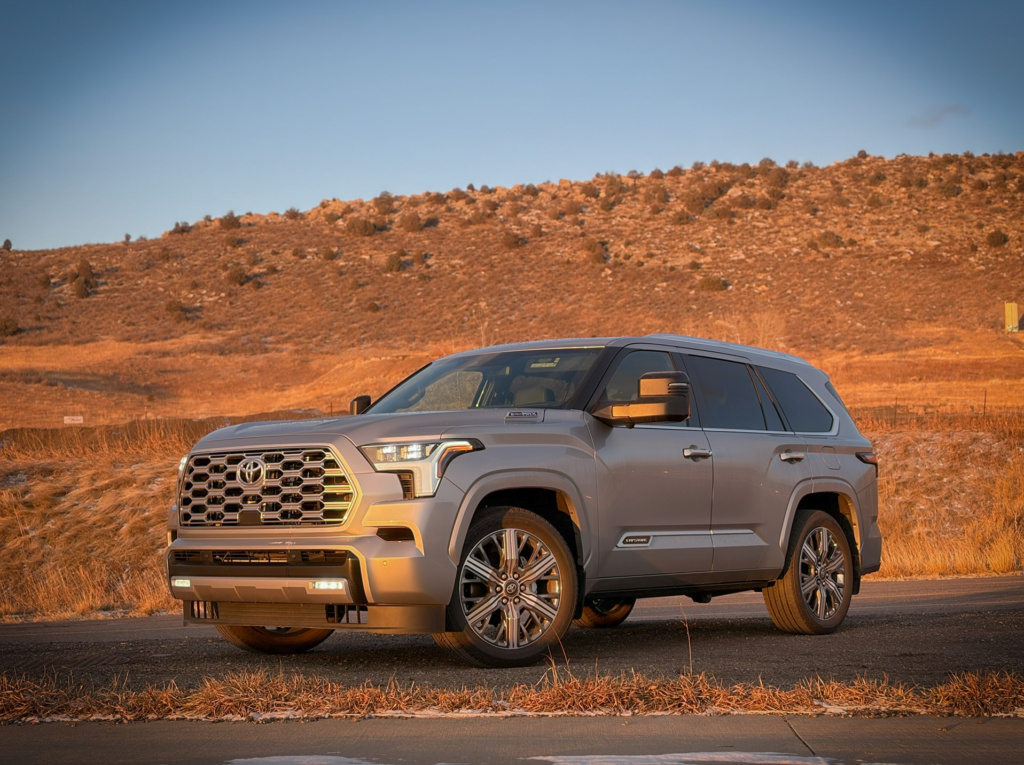
The Toyota Sequoia tries its hand at the posh end of the large SUV segment by loading the Capstone trim with just about every available upgrade; however, it can’t mask the big ‘ute’s simpler underpinnings that, ultimately, hold it back from feeling as polished as its rivals. Still, there is plenty to appreciate every day, such as the ample interior space and power-focused hybrid powertrain.
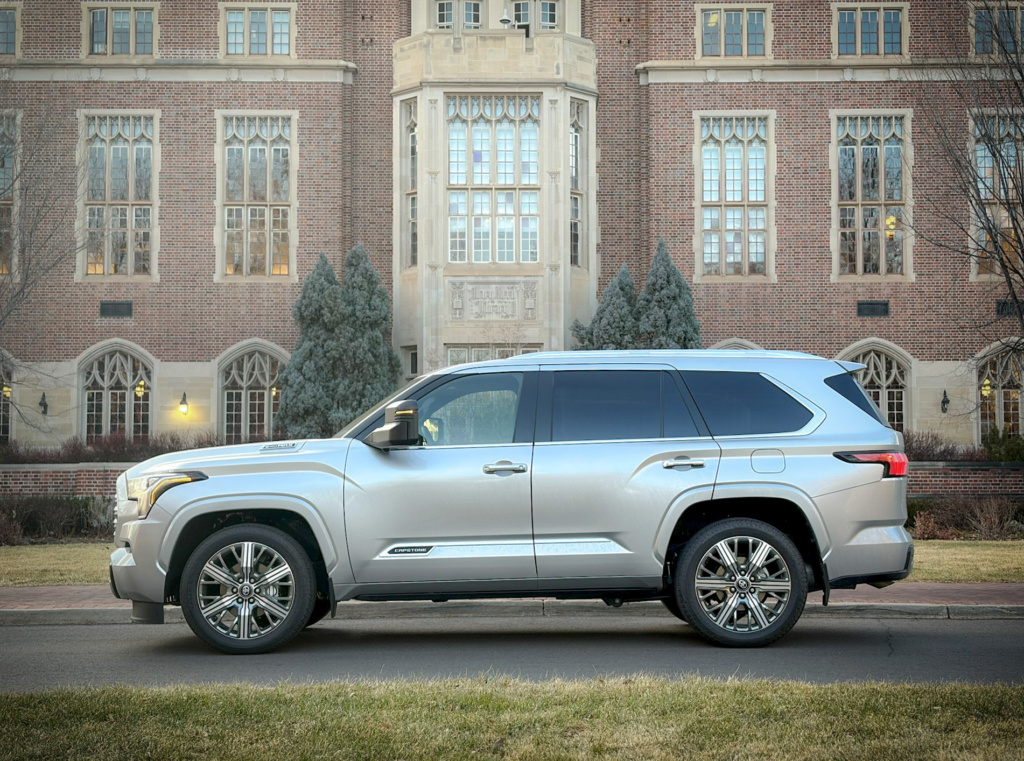
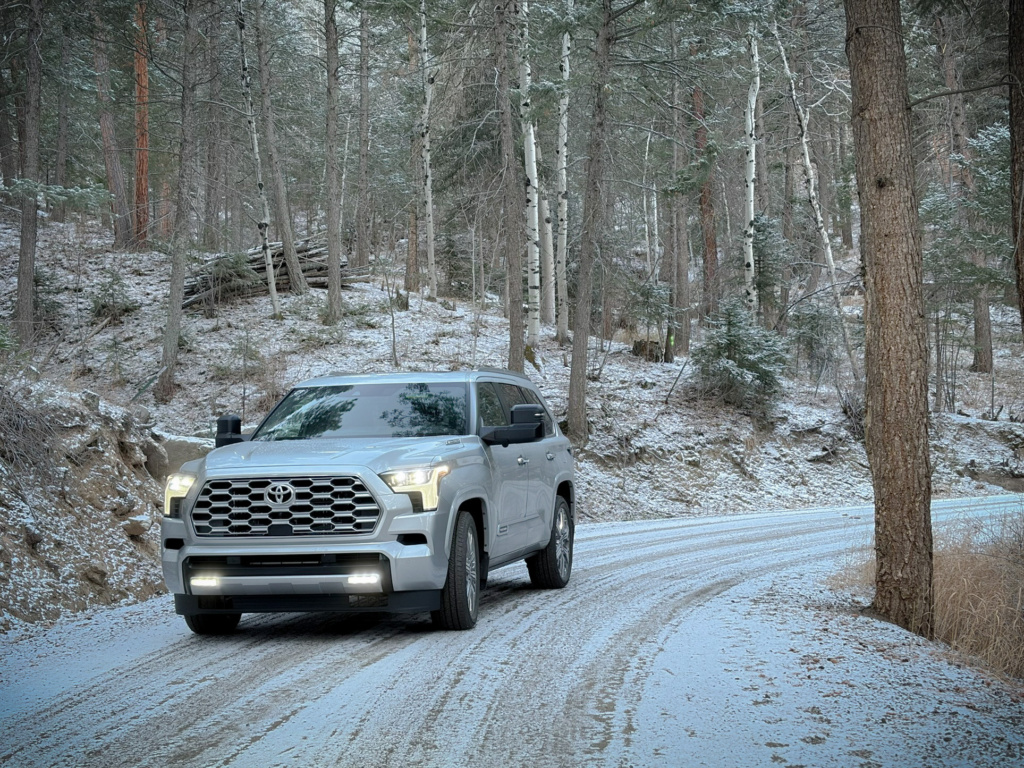
In the large SUV segment, it’s not unusual to adopt much of the styling from its pickup brethren, and the Sequoia/Tundra duo follows suit. The Sequoia’s formidable presence starts with a familiar, tall, upright front end and continues rearward with a flat hood, a long axle-to-front-pillar distance, deep horizontal character lines, straight and bright window sills, and blacked-out A-, B-, and C-pillars. It’s styled to look large and it is, at 208 inches in length.
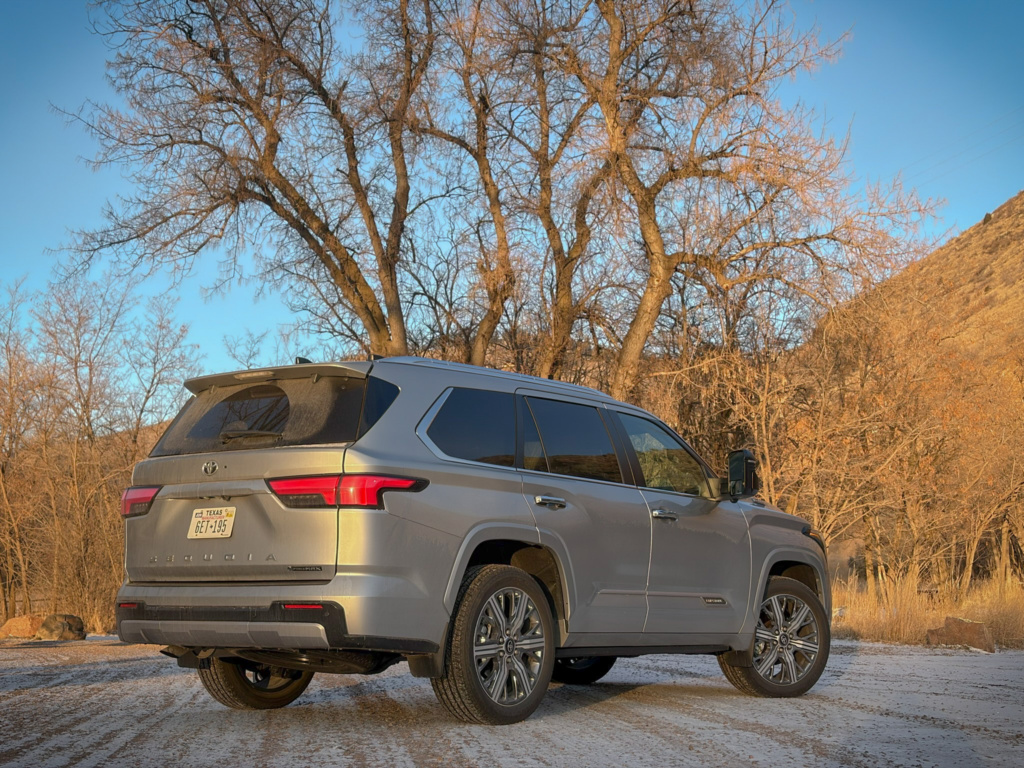
The rear fender’s character line sweeps into the tailgate, providing one of the many crisp horizontal lines and surface breaks that further emphasize the SUV’s burly nature. Also seen in many SUVs is the flip-glass rear tailgate. The design can provide a fast, easy way to access the cargo area without releasing its contents, but here, its opening area is limited to the area of the rear windshield, leaving a short opening and a high reach-over height.
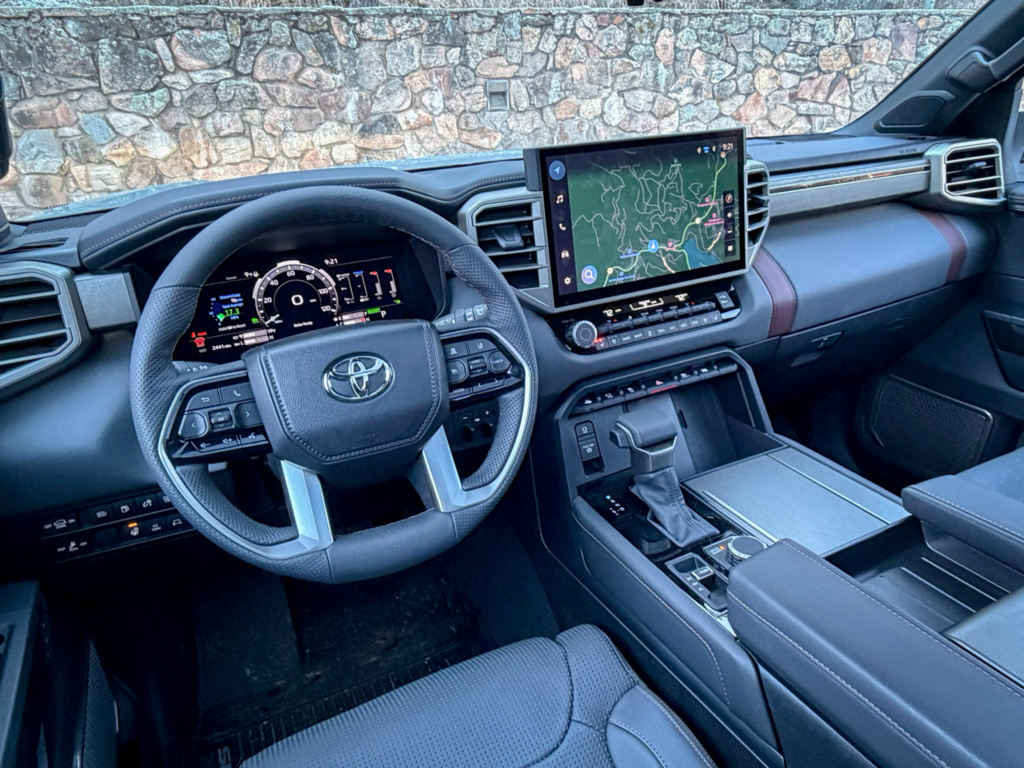
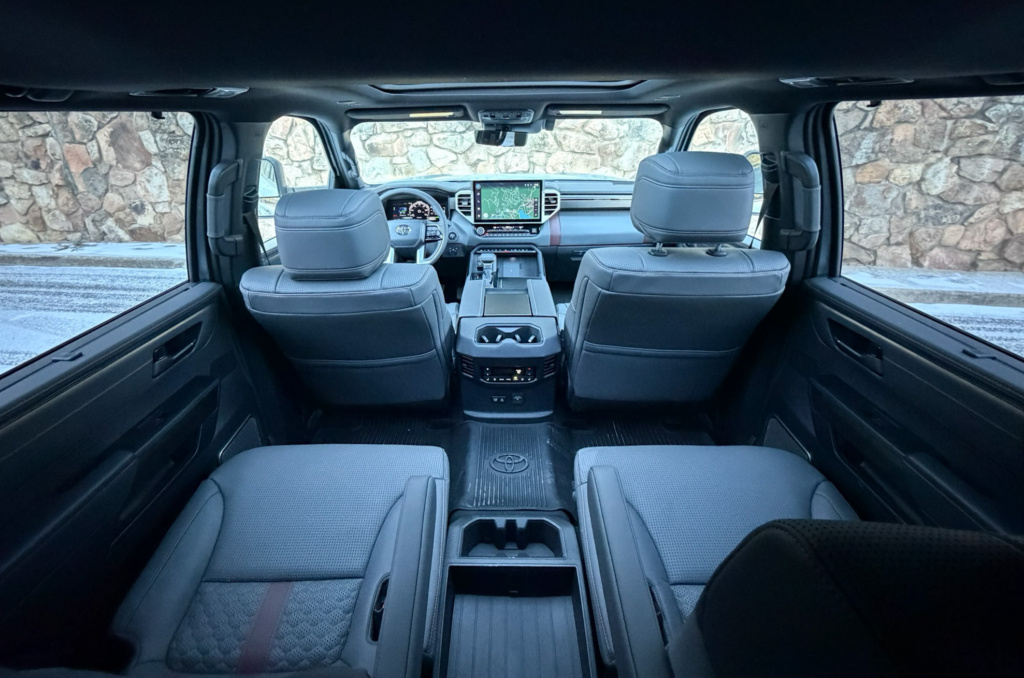
The full-size exterior translates to an interior with a vast dashboard and wide seats with good adjustability and, in this premium trim, upper- and lower-body massage. A large comfortable steering wheel, a big 11-inch digital gauge cluster, a long-reach 14-inch infotainment touchscreen, and a huge center console also convey the sense of largeness. Like the exterior, the cabin’s design is nearly identical to the Tundra’s, which is also available in Capstone trim, adding premium leather surfaces, contrast stitching, and unique wood trim.
Despite its size, there is a notable lack of space to neatly stow small- to medium-sized items, such as sunglasses, phones, and keys. The large center console is more than adequately sized, but it’s far from an elegant solution. Compared to the competition, which adopts a power-sliding console, it feels outdated and uncreative.
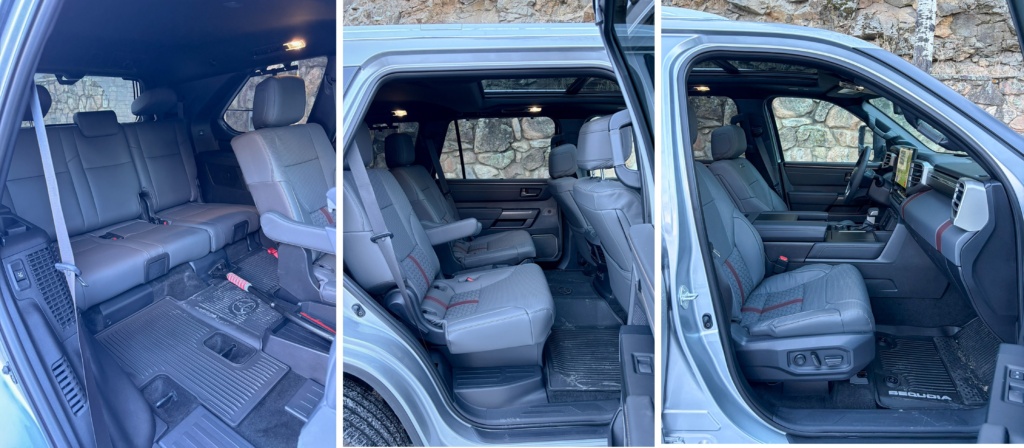
The Sequoia’s cabin can seat seven people, though doing so comfortably requires a compromise between the second- and third-row passengers. Those in the middle row receive good headroom and a nice view through the panoramic sunroof. What’s not so appreciated (by anyone) is the center floor hump, which extends from the front center console all the way to the third row.
The cargo area has a lot to offer, but optimizing the space requires forethought and familiarity with its configurable layouts; each of which relies on a specific position of the load-bearing (250 lbs max) shelf. Not only is this central to the design, but it’s also rather expensive ($350 each) should it ever need to be replaced.
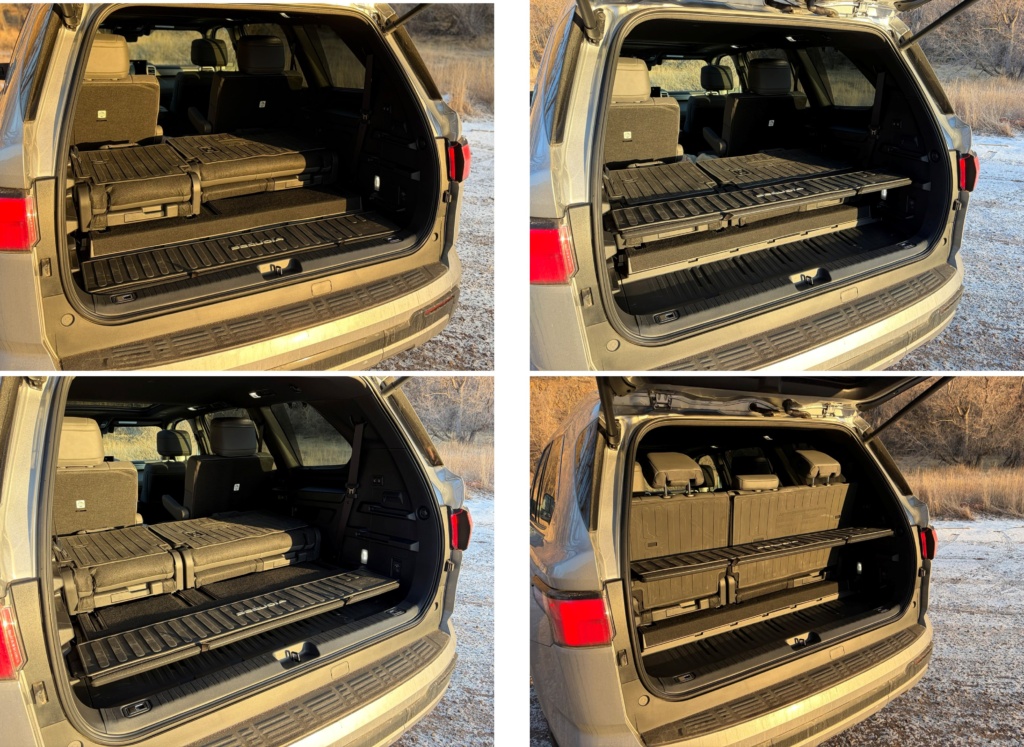
The base position (top left photo) is flush with the tailgate opening but not with the rest of the cargo floor. In the first raised position (lower-left photo), the shelf is level with the cargo floor but not flush with the tailgate opening. Slide the rear seats forward (a two-hand motion) for another six inches of flat floor. The second raised spot (top right) enables a flush surface with the folded third-row seatbacks, but it also creates an unreasonably high lift height. In its highest position (lower right), it serves as a shelf for small items that aren’t likely to roll around.
A large part of the cargo area’s packaging oddities can be attributed to the solid rear axle (and to the battery pack), which plays an even larger role in the Sequoia’s handling.
The rear axle’s added weight and its inherent effect on the opposite wheel prevent the Sequoia from achieving the same premium ride and handling offered by the segment leaders, which use independent rear suspension designs.
Not even the Capstone trim’s adaptive dampers and rear air-springs can smooth things over. Large highway dips seem to press right through the available suspension travel, while sharp road impacts send a secondary shake through the interior. Not helping the matter are relatively low-profile tires (on 22-inch wheels). Alternatively, the TRD and TRD Pro trims feature larger tires and their own damper tuning.
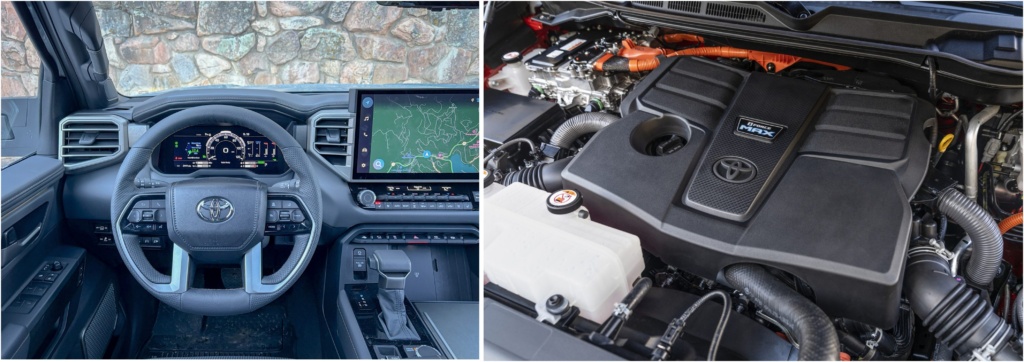
At the heart of every Sequoia is the iForce Max powertrain that includes a turbocharged 3.4-liter V6, a 36-kW motor, and a 10-speed automatic transmission. The result is a very powerful powertrain with a strong off-the-line shove and a continued surge of power that easily carries the 6,000-lb vehicle up to highway speeds (and beyond) as the transmission flips through the gears and the synthetically-enhanced sounds are pumped into the cabin for the full effect (and encouragement). There’s full confidence in the Sequoia’s 9,500-lb towing rating.
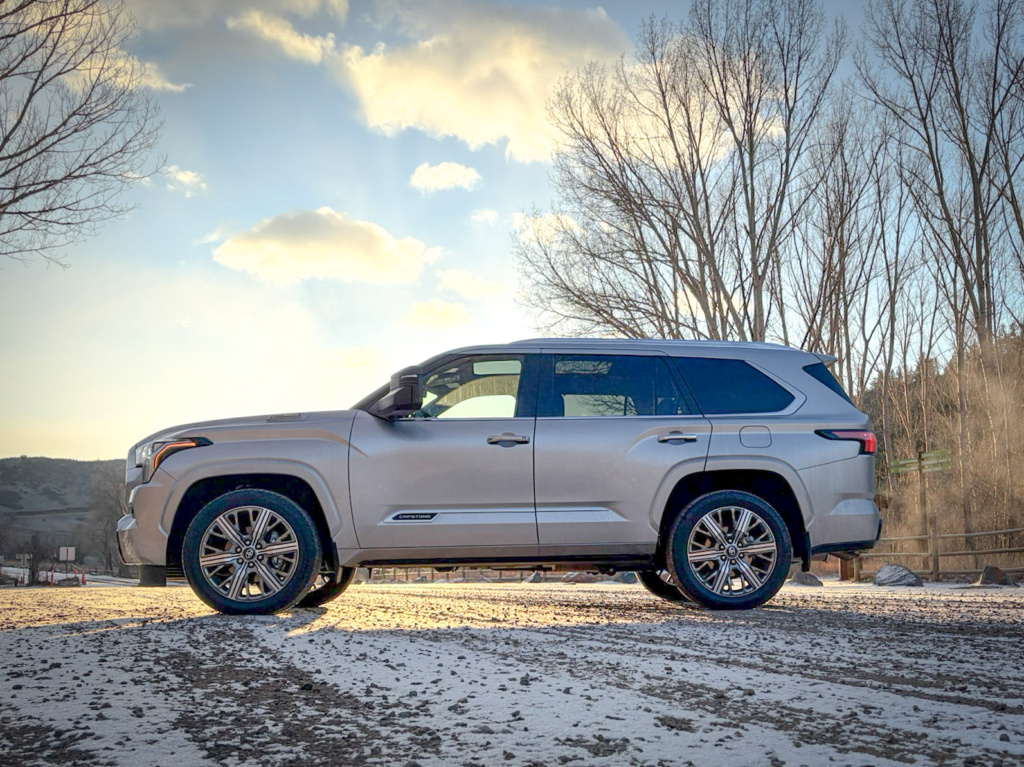
The iForce Max is also keen to showcase the advantages of its design, which are most easily appreciated during heavy rush-hour traffic, where the system’s intuitive responses allow frequent motor-only traveling at low speeds and very light throttle. Any meaningful acceleration requests are met with the joint effort of the engine and motor.
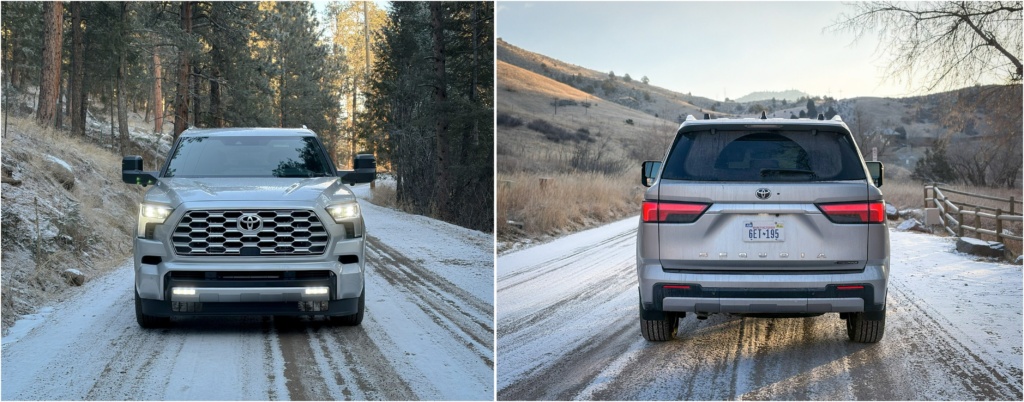
As adaptable as the Sequoia’s powertrain is, the part-time four-wheel drive system isn’t. The on-off nature can be too much or too little for varying surfaces. Add to that the Sequoia’s loaded body motions and solid rear axle, the inside rear tires can struggle to efficiently translate power into motion, prompting the traction control system to cut power rather than engage the front axle, as the systems offered by the competition do.
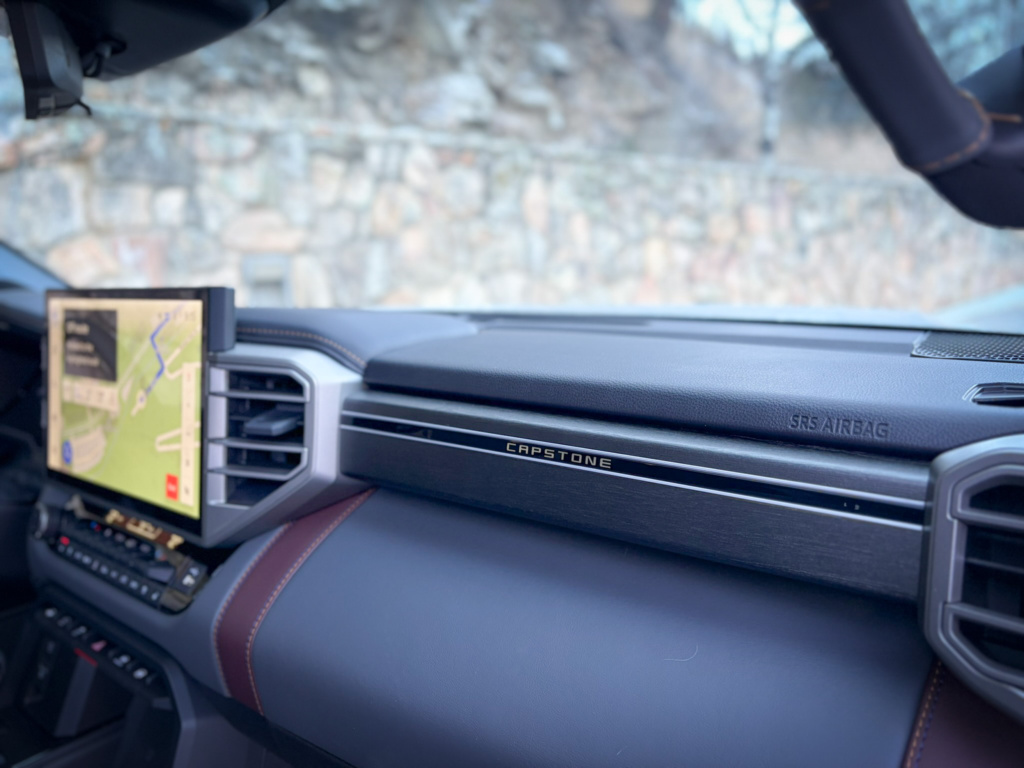
Despite its large interior and delightfully powerful powertrain, the Sequoia’s utilitarian roots are always present, and its ultimate refinement suffers. Its heavy handling (as well as the compromised packaging) may not be a deal-breaker for some shoppers, especially those tied to the Toyota brand, but the competition is undeniably more polished. The top-tier Sequoia Capstone (and its $85k price tag) knows what it wants to be, but the big Toyota comes up short when it comes to excellence in excess.