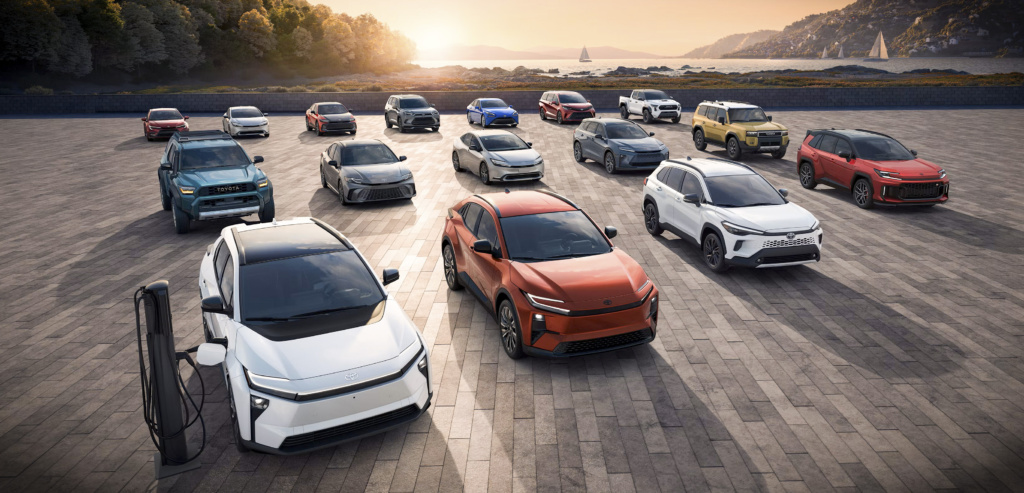
As much as today’s cars vie for our attention with animated welcome lighting, flush door handles, and hand-crafted interior trim, it remains the powertrain that draws us in and can fundamentally determine the vehicle’s success. However, having the right powertrain isn’t as simple as a plug-and-chug formula, forcing full-line automakers, such as Toyota, to not only offer numerous forms of propulsion but also to advance technological innovations in each realm. Whether through combustion control, battery chemistry, hydrogen packaging, or even nuclear fission, the goal is to maximize the potential of the fuel. For Toyota and its engineers, it’s a never-ending mission. For us consumers, it’s never been more exciting.
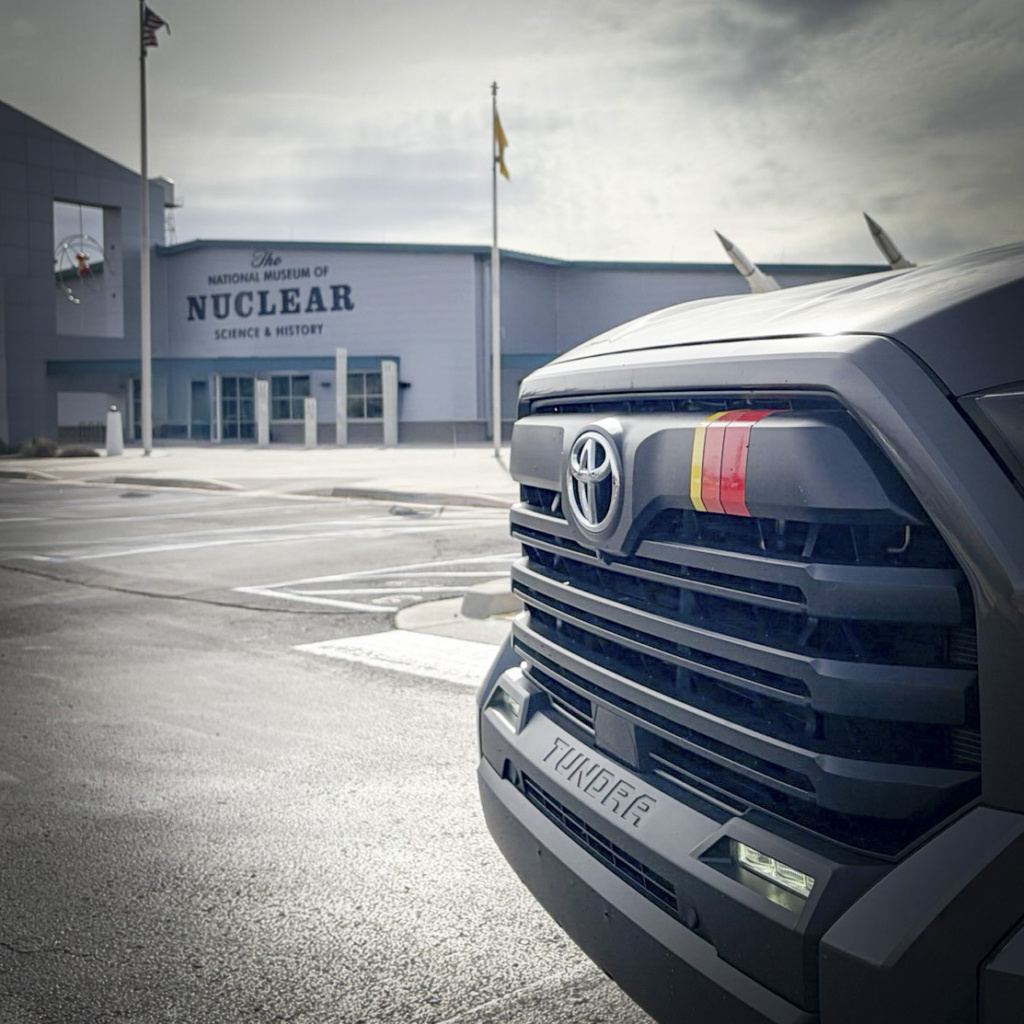
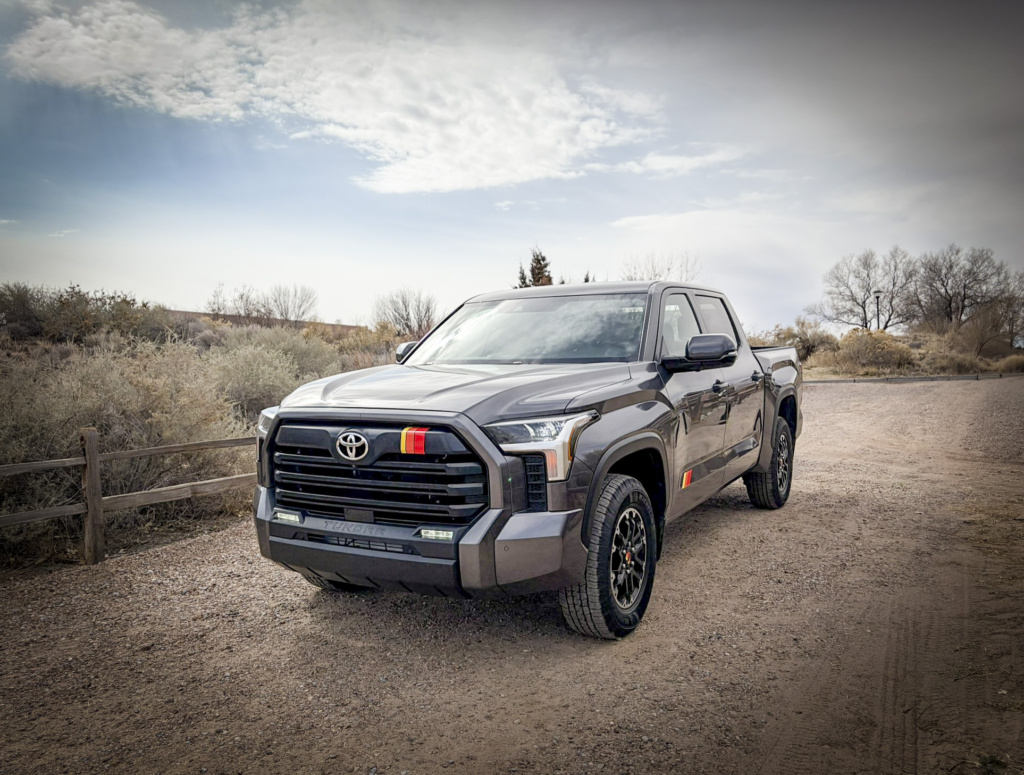
To best frame the performance of today’s realized advancements against the backdrop of tomorrow’s technology, Toyota graciously provided its Toyota Tundra fitted with the new i-FORCE engine for a road trip from Denver to Albuquerque for a visit to the National Museum of Nuclear Science and History, the epicenter of America’s nuclear age.
Combustion Engines – Optimizing the Swirl
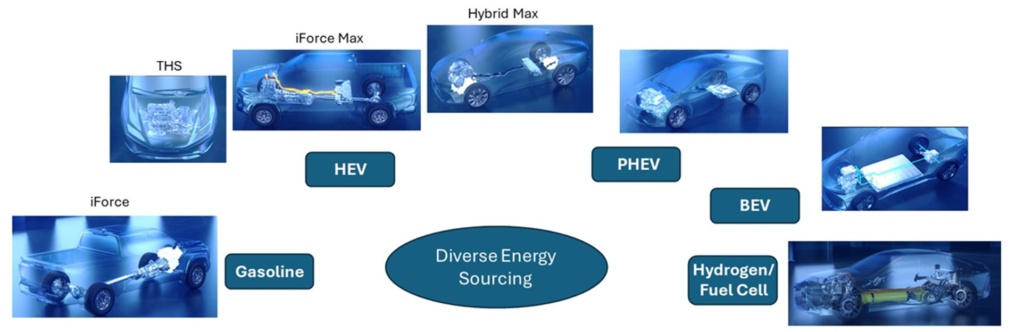
Toyota’s cache of turbocharged gasoline-combustion know-how, dubbed i-FORCE, is currently found in four-cylinder and six-cylinder designs and is built upon innovative material formulations, production methods, and modeling software. Phase-shifting camshafts, high-pressure direct injectors (inside) and low-pressure port fuel injectors (outside), and electronically operated wastegate valves enable precise control over the air-to-fuel swirl. The result is an expanded ideal operating window, enabling greater efficiency and more power. In the case of the Tundra full-size pickup truck, its downsized twin-turbocharged 3.4-liter V6 is not only far more efficient than the naturally aspirated 5.7-liter V8 it replaces, but it’s also easier to drive.
The (Toyota) Hybrid System
For many, the Toyota Hybrid System (THS) is the OG hybrid. When it debuted in the Prius in 2001, it demonstrated that the tire-chirping potential of instantaneous torque and 40 MPG weren’t mutually exclusive. But it wasn’t an easy story to sell. Replacing engine displacement with a motor, a battery, and a host of other electronics and hardware added weight and expense. Worst of all, it was unfamiliar. However, the Prius’ focused mission and technological advancements continued to prove that this marriage was a good idea, especially for America. Today, Toyota fills nearly its entire lineup with hybrid systems, including the Hybrid MAX (or simply MAX), where the instantaneous response supplements the turbocharged engine’s inherent delay in building boost.
Prime Time – Plug-In Hybrid Electric Vehicle
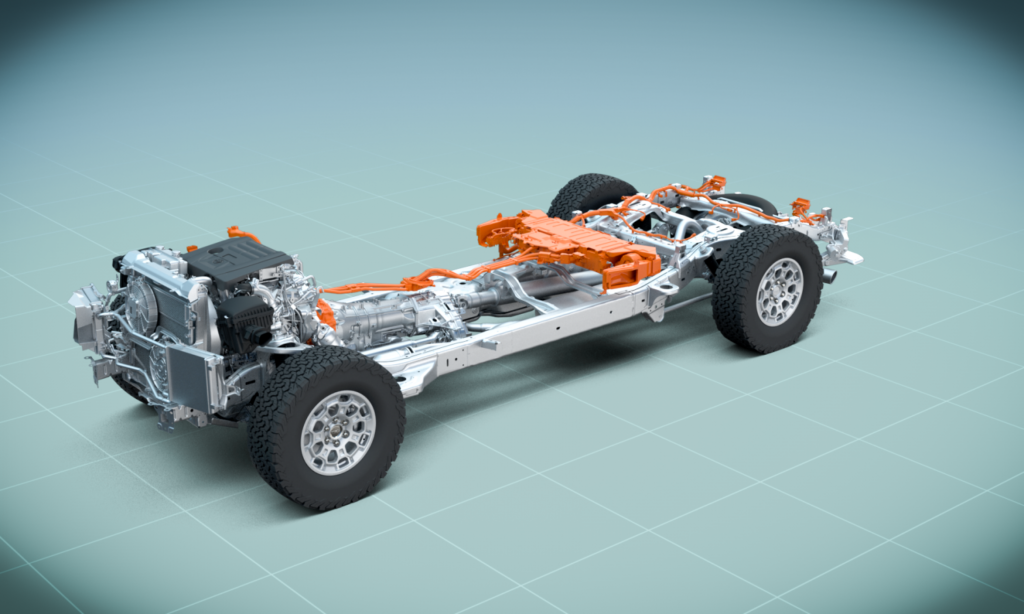
Introduced under the captivating Prime moniker, the Toyota PHEV lineup is expected to continue expanding. Now simply dubbed Plug-In Hybrid, the powertrain can most easily be viewed as a progression of the THS, with the distinction of extended EV driving range. Despite its increased capability, the dual-fuel powertrain requires nothing additional from our refueling infrastructure. Simply plug the PHEV’s ideally sized battery into a typical household (120-volt) outlet overnight for a typical day’s worth of commuting power. For those unexpected errands or long road trips, the gas tank is ready to provide a full day’s worth of uninterrupted travel. But the urban setting is where the PHEV shines brightest, with the electric motors always at the ready; acceleration is smart and smooth. Toyota’s lineup currently includes the Prius and the RAV4 in PHEV form, while Lexus offers the popular NX and RX crossovers.

Battery Electric (BEV) – The Platform Potential of the Future
There’s a lot to like about a fully electric powertrain in concept. For Toyota, the greatly reduced complexity, increased packaging flexibility, and ease of scalability are coveted traits. For consumers, the significantly reduced maintenance chores, the ability to refuel at home, and a superb driving experience are also incredibly appealing. The notable downsides are those that typically follow emerging segments, where the technology is still advancing swiftly and significantly, leading to high initial costs and crushing market depreciation. Toyota’s decision to build its own $14B battery manufacturing center in North Carolina – which recently ramped up to full production – is seen as a path to control some of those costs by enabling a faster concept-to-production timeline and rapidly adopting new technologies as battery chemistry evolves for faster recharging, improved stability at extreme temperatures, and reduced battery degradation over the years.
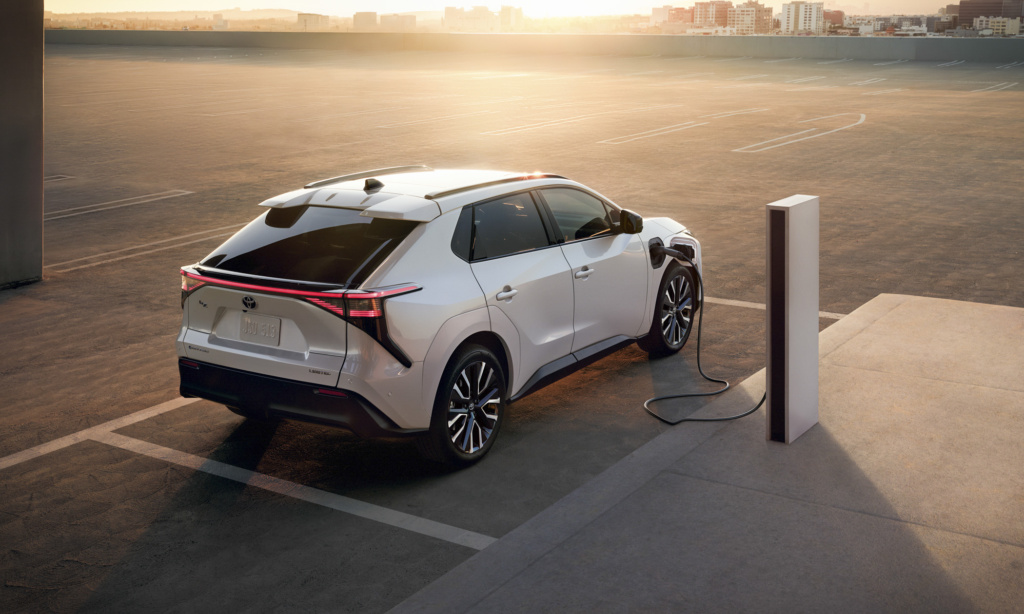
Two new BEVs to expand to Toyota’s 2026 all-electric lineup, joining the bZ (formerly bZ4X): the larger and ruggedly styled bZ Woodland and the urban-chic C-HR. Looking further ahead, the familiar three-row Highlander crossover is slated to adopt an all-electric powertrain.
Hydrogen Fuel-Cell Electric Vehicle
Toyota has long been the greatest champion of fuel cell technology as a zero-emissions powertrain, launching the Mirai FCEV passenger car in 2015 and then following up with an unexpectedly stylish sedan for its second generation in 2021- demonstrating massive technological advances in just a few years. With a tank full of compressed hydrogen, the fuel cell stack initiates an electrochemical reaction to generate electricity, which powers an electric motor and is buffered by a small battery, with water vapor as the only tailpipe emission.
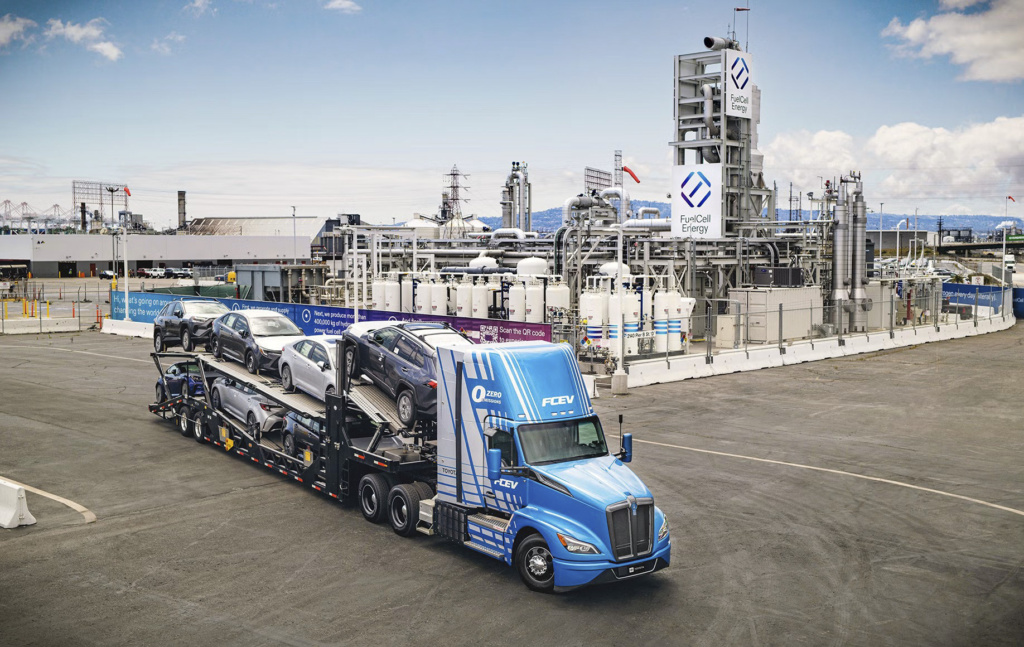
While the refueling process takes mere minutes, severe infrastructure challenges have throttled public access, with high fuel costs and recent station closures leaving the remaining network clustered strictly in parts of California. Recognizing these limitations for everyday consumers, Toyota is shifting its focus toward commercial logistics, where localized refueling infrastructure can be efficiently scaled, and its long-term benefits predictably realized.
Advanced Energy Investment(s)
Astonishingly, over the past 20 years, the U.S electricity supply and demand have remained relatively flat despite steady growth in GDP and population. According to a recent U.S. Energy Information Administration (EIA) report, this stabilization was driven primarily by efficiency improvements in power generation, transmission, and end-use technologies. However, a shift is underway. The past five years have seen an annual increase in electricity consumption of about 2.1% – a trend expected to continue at a steady rate through 2050. While much of that demand stems from data servers, natural gas extraction, and the energy-intensive bulk chemicals industry, electric vehicles will play a major role, with their market share projected to reach 46% by 2050 as technology costs decline and encourage greater adoption. To carry this burden, the grid will rely largely on natural gas and renewables, but nuclear is poised to contribute more than ever thanks to green research initiatives. Yet significant hurdles still remain. As detailed at the National Museum of Nuclear Science and History, the process for refining the fuel is exceptionally challenging, while the process of using the fuel is surprisingly straightforward- just terribly inefficient. Current reactors utilize a mere 1-2% of the fuel before the rods become too contaminated to sustain fission. Once “spent”, the entire reactor must be brought offline to replace them, adding another layer of operational inefficiency.
And for Toyota, there’s possibly no greater trigger word than inefficiency.
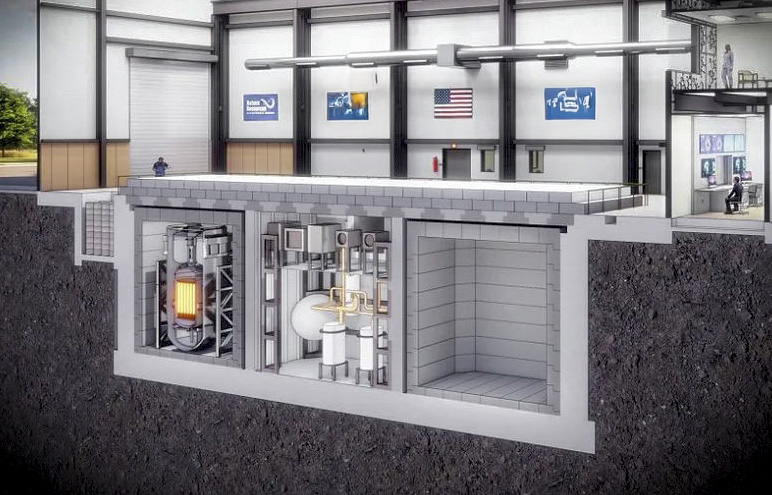
Toyota Ventures is betting on this frontier, recognizing significant gains from a “new” method that has actually been proven since the 1960s. By joining today’s know-how of materials, manufacturing, and process controls, the Molten Salt Reactor (MSR) blueprint exhibits incredible near-term potential and significant advantages over the traditional light-water reactor (LWR) design. Specifically, nearly all of the fuel can be utilized through an in-process “cleaning” system, as well as permitting higher sustained temperatures and doing so at atmospheric pressure. While this yields higher energy output in a safer environment, extreme temperatures, chemical corrosion, and intense radiation pose critical material challenges. Furthermore, processing the spent fuel requires precise chemical management for continuous core reintroduction. The concept isn’t in doubt, but research and development are still necessary to refine the details.
The Way Forward
In fact, the same can be said of all forms of energy and how we use it, and improvements are always possible, whether the process has been refined for more than a century or is just getting going with its supply chain. There simply isn’t a defined path for which powertrains or which fuel we’ll be using in the next 100 years, but one thing is for certain and evident with Toyota’s iForce engines: the pursuit of the best powertrain will never cease.